11 Sports Cars That Deliver Supra Thrills for Less
These manual-transmission alternatives trade some straight-line speed, cabin polish, or modern equipment for lower prices and distinctive driving character.
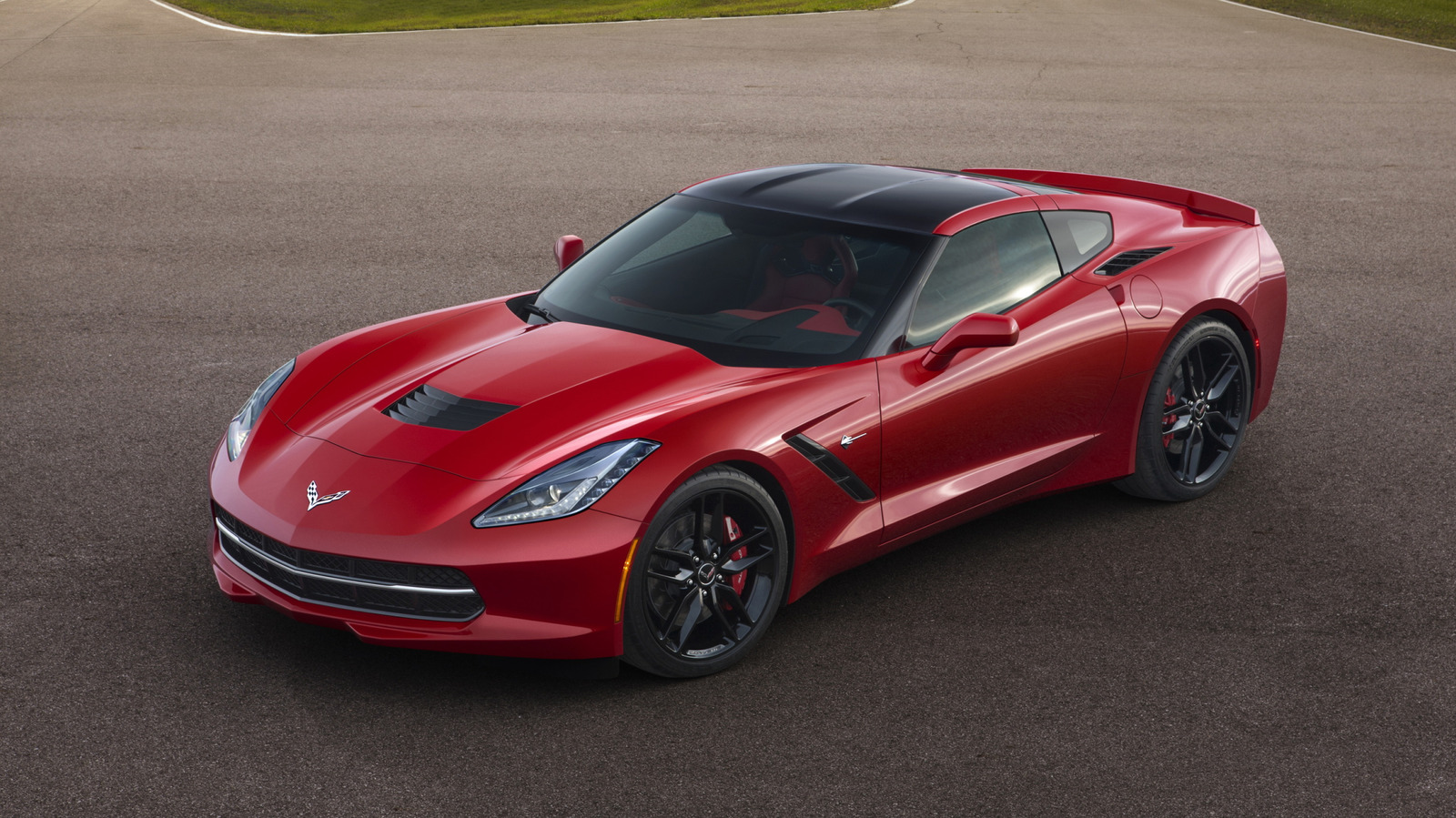
Chevrolet Corvette Stingray (C7)
The C7 Corvette is a convincing bargain here because it offers serious performance without abandoning a manual gearbox. Its 6.2-liter LT1 V8 produces 455 horsepower and 460 pound-feet of torque, and the seven-speed manual gives the car an unusual extra ratio for a stick-shift sports car. The available Z51 package adds improved cooling, an electronically controlled limited-slip differential, larger wheels, close-ratio gearing, and bigger brakes. Even the standard Stingray has a highly capable chassis, while Z51 adds further performance hardware. The Corvette's mid-$44,000 average value places it near the upper edge of this group. Against the Supra, it matches the 3.9-second 0-to-60-mph time, beats its quarter-mile by a tenth, and posts 1.08 g on the skidpad; its main drawback is fuel economy.
Chevrolet Camaro SS (Sixth Generation)
A sixth-generation Camaro SS is the answer for shoppers who want Supra-level acceleration with a traditional V8 soundtrack. The 6.2-liter LT1 makes 455 horsepower and 455 pound-feet of torque, while the six-speed manual keeps the driver involved. Its chassis is more than a big engine surrounded by bodywork: Brembo brakes, optional magnetic dampers, and a drive-mode selector let the SS shift between road manners and track intent. The Camaro can match the Supra's 3.9-second sprint to 60 mph and 0.98-g skidpad result, making it one of the few alternatives here that genuinely keeps pace in testing. Earlier sixth-generation examples are the value play, with listings ranging from the high-$20,000s to about $40,000 rather than the roughly $44,000 average. Poor outward visibility and an aging interior are real ownership penalties. The V8's shove and the Camaro's composed handling are the counterweight.
BMW M2 (F87)
The F87 BMW M2 packages the Supra's essential formula in a shorter, more focused shape: two doors, rear-wheel drive, a turbocharged straight-six, and an available manual transmission. Its N55 engine produces 365 horsepower, enough for a 4.2-second run to 60 mph and a 12.7-second quarter-mile. BMW kept the recipe comparatively simple. Fixed dampers and springs replace the adjustable hardware found in the M3 and M4, and the car uses a regular N55 rather than a bespoke M engine. That restraint is part of the appeal: the M2 feels like a compact performance car instead of a technology catalog. Non-Competition examples average about $37,000, leaving meaningful room below the typical Supra market. The older BMW still carries the maintenance exposure of a German performance car, and its ride will not be as relaxed as the newer Toyota's. In exchange, it supplies compact dimensions and serious pace.
Nissan 370Z NISMO
The Nissan 370Z NISMO is the straightforward choice: naturally aspirated V6 power, rear-wheel drive, and a manual transmission without the Supra's turbocharged complexity. Its 3.7-liter VQ engine makes 350 horsepower and 276 pound-feet of torque. A SynchroRev Match six-speed automatically handles heel-toe downshifts, while stiffer suspension pieces, structural dampers, a front splitter, and a rear wing give the NISMO more purpose than a cosmetic package. Car and Driver recorded 0.99 g on the skidpad, an impressive grip figure for an older design. Power stayed unchanged through the model's run, which ended in 2020, so buyers are not chasing one special late-year engine tune. The average used price is about $25,800, making this one of the clearest budget wins in the group. Its trade-offs are equally plain: less torque than the Supra and far less modern cabin technology. The payoff is a familiar, mechanical sports-car layout.
Ford Mustang Boss 302 (S197)
The S197 Ford Mustang Boss 302 turns a familiar pony car into a disciplined driver's machine. Built for the 2012 and 2013 model years, it uses an all-aluminum 5.0-liter V8 with a revised intake manifold, higher-lift camshafts, larger intake valves, new bearings, and upgraded cylinder heads. Output reaches 444 horsepower and 380 pound-feet of torque. Stiffer springs, bushings, and bars, larger Brembo brakes, and a six-speed manual complete the package. This is why the Boss feels more cohesive than the lazy-chassis stereotype attached to older V8 Mustangs. Its 4.3-second 0-to-60-mph time is only four-tenths behind the Supra's figure, though its road-holding is slightly weaker. The regular Boss is the attainable version; the more specialized Laguna Seca model falls outside the budget. At roughly $35,000 on average, the car buys substantial engine and chassis hardware. The weak point is the dated interior, unmistakably from an earlier Mustang era.
BMW M3 (E46, Manual)
The E46 BMW M3 remains a strong alternative for drivers who want a usable coupe with a high-revving engine and serious chassis engineering. North American cars received the same 3.2-liter S54 straight-six as the European market, producing 333 horsepower from 2001 onward. BMW also fitted bespoke suspension components, a quicker steering rack, and wider fenders instead of treating the M3 as a regular 3 Series with extra power. The result combines comfort with a manual gearbox and confident road behavior, though the ride can feel less forgiving than the Supra's. Manual examples average around $37,000, a steep figure for an older car but one that reflects the model's enduring reputation. Its age brings inspection concerns even though the E46 has a better reliability reputation than many German performance cars. Competition-spec cars can approach $40,000, putting the sharper version within reach of a higher budget.
Porsche Cayman (987.2, Manual)
The 987.2 Porsche Cayman is the purist's pick when cornering balance matters more than horsepower. The refreshed base model uses a 2.9-liter naturally aspirated flat-six making 265 horsepower and 221 pound-feet of torque, paired with a six-speed manual. Mid-engine balance gives the Cayman a rare sense of composure in this price bracket, and Car and Driver measured 0.96 g on the skidpad. The 987.2 refresh also removed the IMS bearing problem entirely, a major distinction from earlier cars and an important ownership detail. Manual examples average about $38,000, so purchase price alone does not make this a cheap sports car. Parts cost more than they do for many mainstream alternatives, and the Cayman gives up the Supra's power, space, and newer cabin. Proper care matters with a car of this age, but the reward is a naturally aspirated soundtrack and a back-road experience that can feel more precise than the Toyota's. Its mid-engine layout is the defining distinction among these alternatives.
Porsche 911 Carrera (996.2, Manual)
The 996.2 Porsche 911 Carrera makes the most provocative case in this ranking: a manual 911 can cost less than a used modern Supra. Produced from 2002 through 2004, the updated Carrera received changes to 80% of its engine internals and an improved VarioCam system. Its 3.6-liter naturally aspirated flat-six delivers 315 horsepower and 273 pound-feet of torque. Porsche also reduced front and rear lift, increased frame rigidity by 25%, fitted lighter 17-inch wheels, added Turbo-style headlights, and retuned the dampers. The car reaches 60 mph in 4.6 to 5 seconds, slower than the Toyota in a straight line, but its badge and rear-engine character remain difficult to duplicate for the money. Manual examples average $36,492. The famously uninspiring interior is the visible compromise, while age makes condition central to the ownership equation. This is a 911 bought for the driving experience, not for modern convenience.
Honda S2000 (AP2)
The AP2 Honda S2000 is smaller and slower than a Supra, but its engine makes it a serious enthusiast purchase rather than a consolation prize. Honda enlarged the naturally aspirated inline-four to 2.2 liters, revised the VTEC components, increased compression, and connected it to a six-speed manual. The result is 240 horsepower, 162 pound-feet of torque, and an 8,000-rpm redline. That high-revving character is the S2000's defining mechanical experience, while the gearbox has earned a cult following of its own. Well-kept AP2 examples cost around $35,000, reflecting demand for a model that has become more desirable rather than cheaper with age. The convertible body changes the ownership proposition: weather exposure, top-related upkeep, and more than two decades of use matter here. Acceleration is modest by modern standards, with a 5.4-second 0-to-60-mph time, but the car's appeal lies in the engine response and open-air involvement. It is a specialist roadster, not a two-seat coupe substitute.
Toyota GR86
The Toyota GR86 is the newest low-cost entry here and the cleanest way to stay inside Toyota's performance family. The second-generation car arrived for 2022 with a 2.4-liter naturally aspirated flat-four, 228 horsepower, and 184 pound-feet of torque. A six-speed manual is available, and the engine's torque peak arrives at 3,700 rpm, eliminating much of the first-generation car's notorious low-end hole. That makes the GR86 easier to use every day without sacrificing its back-road character. The cabin is genuinely nice, and the chassis can produce a 0.98-g skidpad result, but the car reaches 60 mph in 5.4 seconds and cannot match the Supra's turbocharged thrust or sound. Used examples average about $30,000. The GR86 is therefore less a discounted Supra than an affordable sports coupe with unusually little compromise. Its modest output is the point: speed arrives through momentum and balance.
Mazda Miata (ND)
The ND Mazda Miata is the least powerful alternative and one of the most consistently rewarding. Its naturally aspirated 2.0-liter inline-four produced between 155 and 181 horsepower across the production cycle, and every version offers a six-speed manual. The car is smaller, slower, and less dramatic-looking than the Supra, but its light-footed road manners explain why Car and Driver has placed the Miata on its 10Best list 19 times since the nameplate debuted in 1990. A used ND averages around $25,000, and a new 2026 model costs less than a used Supra. Buyers choosing the RF get a targa-style solid roof instead of the traditional soft top, while the standard car remains a true convertible. This is not the choice for effortless highway acceleration or a grand-touring cabin. It is the choice for a lower purchase price, a simple naturally aspirated engine, and a manual sports-car experience that makes ordinary roads feel busy. The RF supplies the closer coupe silhouette.